Storm damage roof repair in Kiefer
Get help with roof concerns after wind or hail in Kiefer. Explain what you have noticed and arrange a free inspection of the actual roof.
The inspection is free and a roofer walks the roof when conditions allow. You decide what happens next.
Wind and hail damage on Kiefer roofs
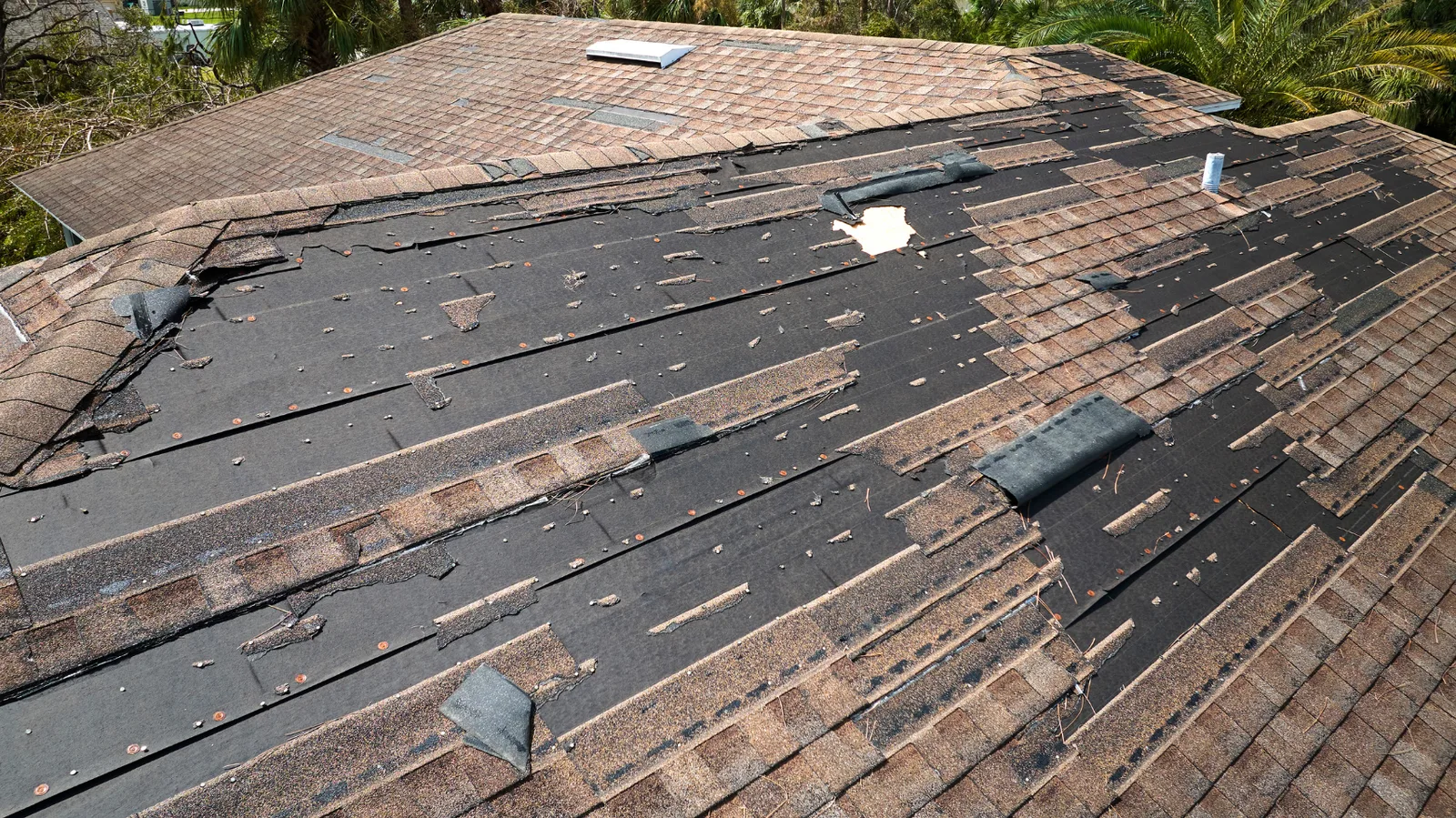
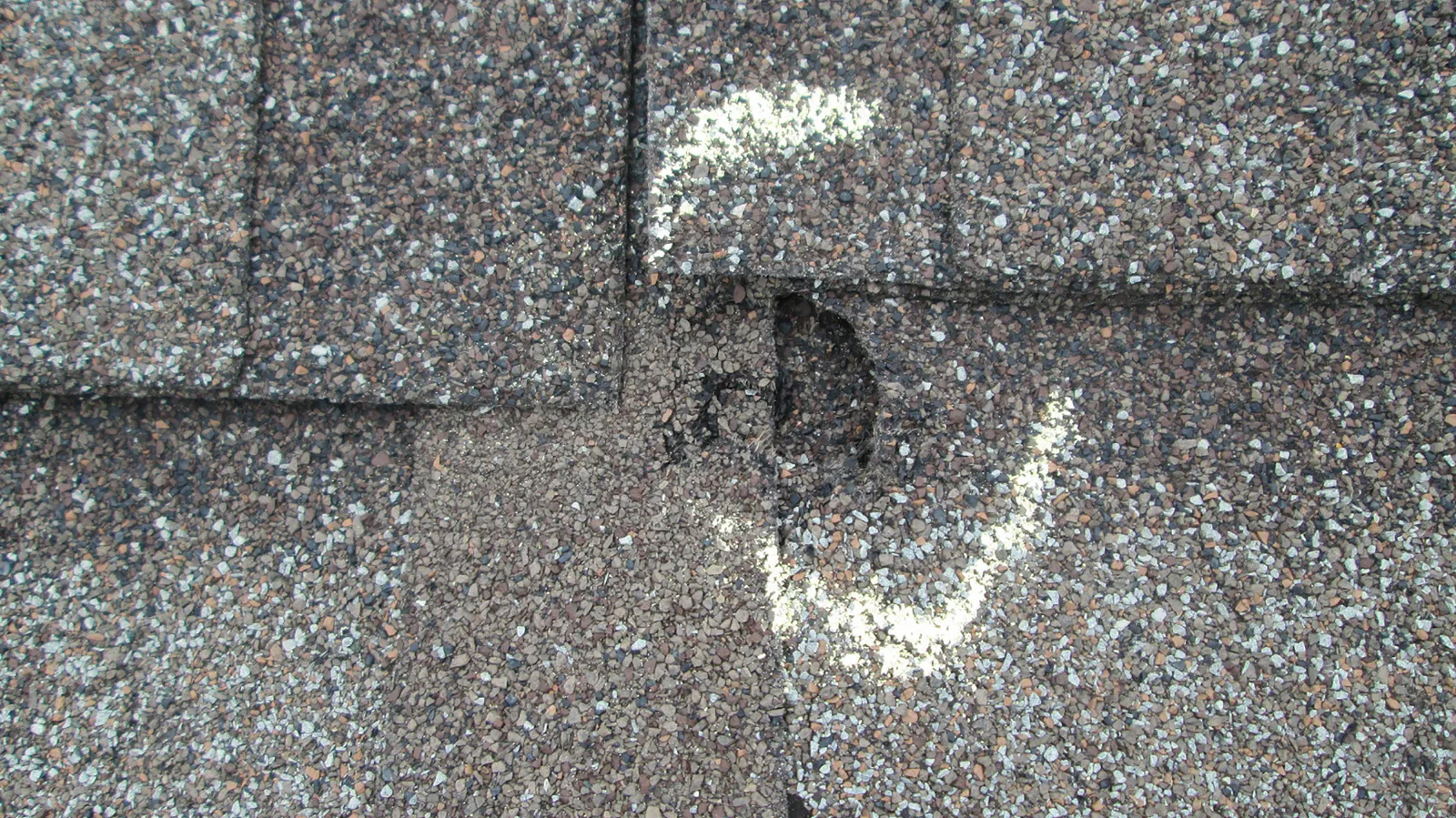
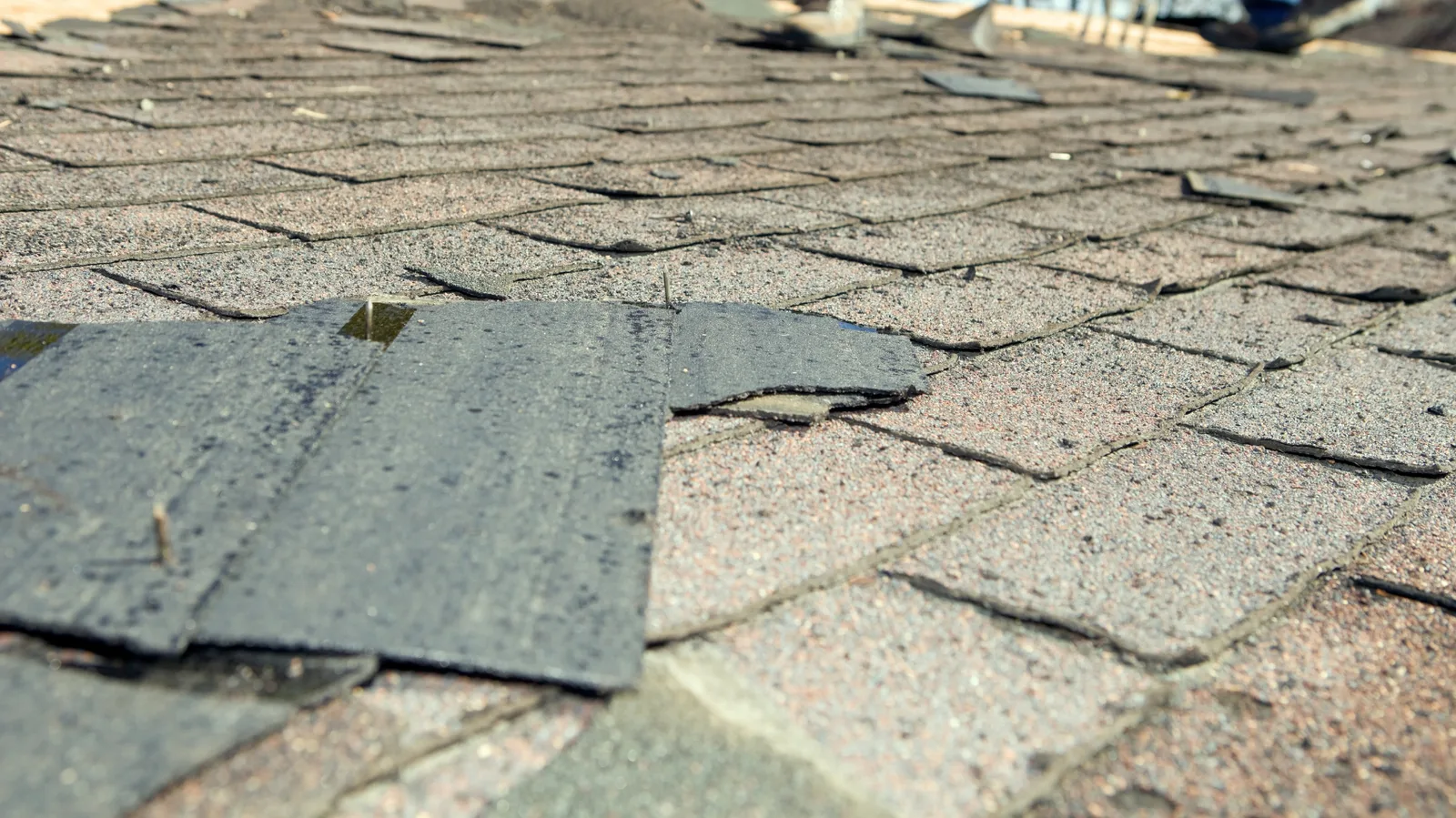
Wind and hail damage a roof in different ways, and the difference matters for the repair. Wind works on edges and seals: it gets under a shingle tab, breaks the adhesive strip, creases the shingle along the nail line and, at ridges and rakes, tears whole courses away. Hail works on the surface: it bruises the shingle, knocks the protective granules loose and can crack the mat underneath, so the shingle keeps shedding water for now and fails early in the seasons that follow.
A missing section is easy to notice from the yard. What the yard cannot show is the condition around it and below it: whether the neighboring shingles will hold a repair, whether the flashings and vent caps took the same beating, and whether water got under the covering and into the deck. A roofer walks the roof, free, when conditions allow, and sorts a contained repair from damage that needs a larger area opened and replaced. A storm date alone does not make that decision.
What storm damage can change in the repair
After a storm the roof gets looked at as a whole, because wind and hail do not confine themselves to the spot you can see.
- The damaged covering
Creased and torn shingles come out and are replaced course by course, with the new ones sealed into their neighbors. Hail-bruised shingles are the harder call: a bruise you can feel with a thumb has broken the mat even when the shingle still looks whole, and the repair reaches as far as the bruising does. The edge of the repair is wherever the roofer can tie into shingles that still flex and seal.
- The roof connections
Wind lifts and bends flashing, tears the collars off vents and pulls counter flashing out of chimney joints. Hail dents soft metal vent caps and splits aged pipe boots. These connections carry water past the openings in the roof, so each one is checked and rebuilt with the right overlaps rather than sealed over.
- The layers below
If shingles were gone for days before anyone got up there, rain has been on the underlayment and possibly the decking. Torn underlayment is replaced under the new courses. Decking that has gone soft is cut back to the rafters and replaced, and since nobody can see that until the covering is open, the scope names how it will be measured and priced if it turns up.
From the storm to a finished repair
Storm work runs in an order that keeps safety, the roof and the claim separate, and gets the roof closed as soon as it can be.
- 1
Make the house safe and tell us what changed
Stay off the roof and away from fallen lines and sagging ceilings. Then describe the property, what you can see from the ground, whether water is coming in and roughly when the storm passed. That is all the inspection needs to start.
- 2
Temporary protection where water is entering
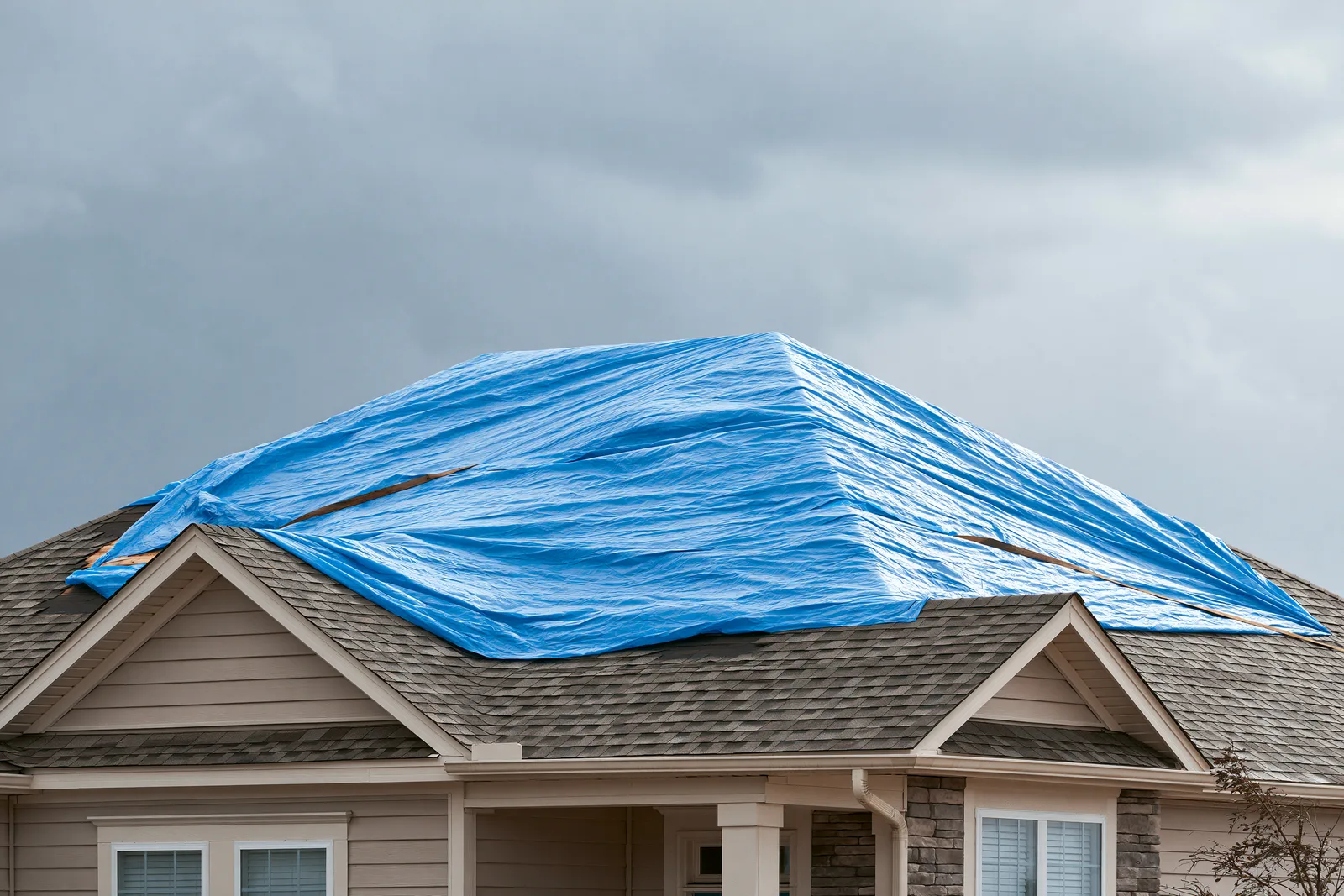
If rain is getting in, the first job is to limit it. What that looks like depends on the roof, the access and the weather on the day, so the method is decided on site rather than promised in advance. A tarp buys time; it does not repair anything underneath it.
- 3
Walk the whole roof
Every slope, every ridge and edge, every vent cap and flashing, not just the area you saw from the yard. Wind damage clusters at ridges, rakes and the windward slope; hail is spread across whatever faced the storm. The roofer also lifts the courses around the damage to see whether they will hold a repair.
- 4
Separate the roof from the claim
The roofer describes the physical damage and the work it needs. Whether the policy covers it, and how much, belongs to the insurer and the adjuster. Keeping the roofing scope in plain physical terms is what lets the two documents be compared when they differ.
- 5
Repair or replace, then close the roof
A defined area of damaged courses, connections and any affected decking is opened, rebuilt with the overlaps correct and sealed. When the damage runs across whole slopes, or the surrounding shingles are too brittle to hold new work, a replacement price sits beside the repair and you compare the two.
Protect people and belongings while help is arranged
The roof can wait for a roofer. A wet ceiling and a live wire cannot.
Stay off the roof after a storm. Wet shingles and loose ones do not hold a foot the way dry ones do, and a fallen limb can be resting on something that is about to give. Keep away from downed lines, unstable branches, wet electrical fixtures and any ceiling that is sagging or holding water. Immediate danger calls for qualified emergency or electrical help before it calls for a roofer.
Inside, move belongings out from under the drip and catch the water only where you can do so safely. Do not try to relieve a sagging ceiling yourself; say so when you call.
When you request roofing help, tell us which room is affected and when the water started. Temporary protection can be part of the response when water is entering, but the method and the access need a roofer on site to decide. Do not climb up to install a tarp yourself, and do not treat a tarp as the repair.
Storm records and insurance answer different questions
The Creek County storm report archive is useful for one thing: the date. Insurers ask when the damage could have happened, and a dated hail or wind report near town is context worth keeping for that conversation. It is not evidence that your roof was hit, and it does not set the repair scope. The roof does that.
Insurance coverage depends on the policy, the cause of the damage and the insurer’s findings. Age and ordinary wear are a project you plan and budget for; storm damage is what a claim is for. Keep the roofing proposal clear about the physical work even while a claim is being reviewed: which courses, which flashings, how much decking, what stays. A claim estimate and a contractor’s scope can describe different things, and when they differ, the difference should be explainable in those same physical terms.
Weigh a claim against your deductible. You pay the deductible either way, so a claim earns its place when the storm repair costs well beyond it. That is a decision you make with the numbers in front of you, not one a storm date makes for you.
Storm damage roofing FAQs
Does the roof need to leak before I ask for help?
No. Missing or visibly disturbed material can justify a roofing discussion before water appears indoors, and hail bruising can show nothing from the yard at all. Describe what you can see safely and let the inspection address its significance.
Can a date in the storm archive prove hail damage?
No. The record describes an event report at its recorded location. The storm archive explains the county coverage and report limits; the roof still needs assessment.
Does a tarp mean the roof has been repaired?
A temporary covering is intended to limit exposure while further work is arranged. The damaged covering, connections and any affected underlying material still need an appropriate repair scope.
Will insurance pay for roof replacement?
That depends on the policy and claim findings. Neither a storm report nor requesting an inspection guarantees payment or determines whether repair or replacement is appropriate. Discuss coverage with the insurer and roofing work with the contractor.
Discuss roof damage after a storm
Share the property location, what changed after the storm and whether water is entering. Request a free roof inspection.