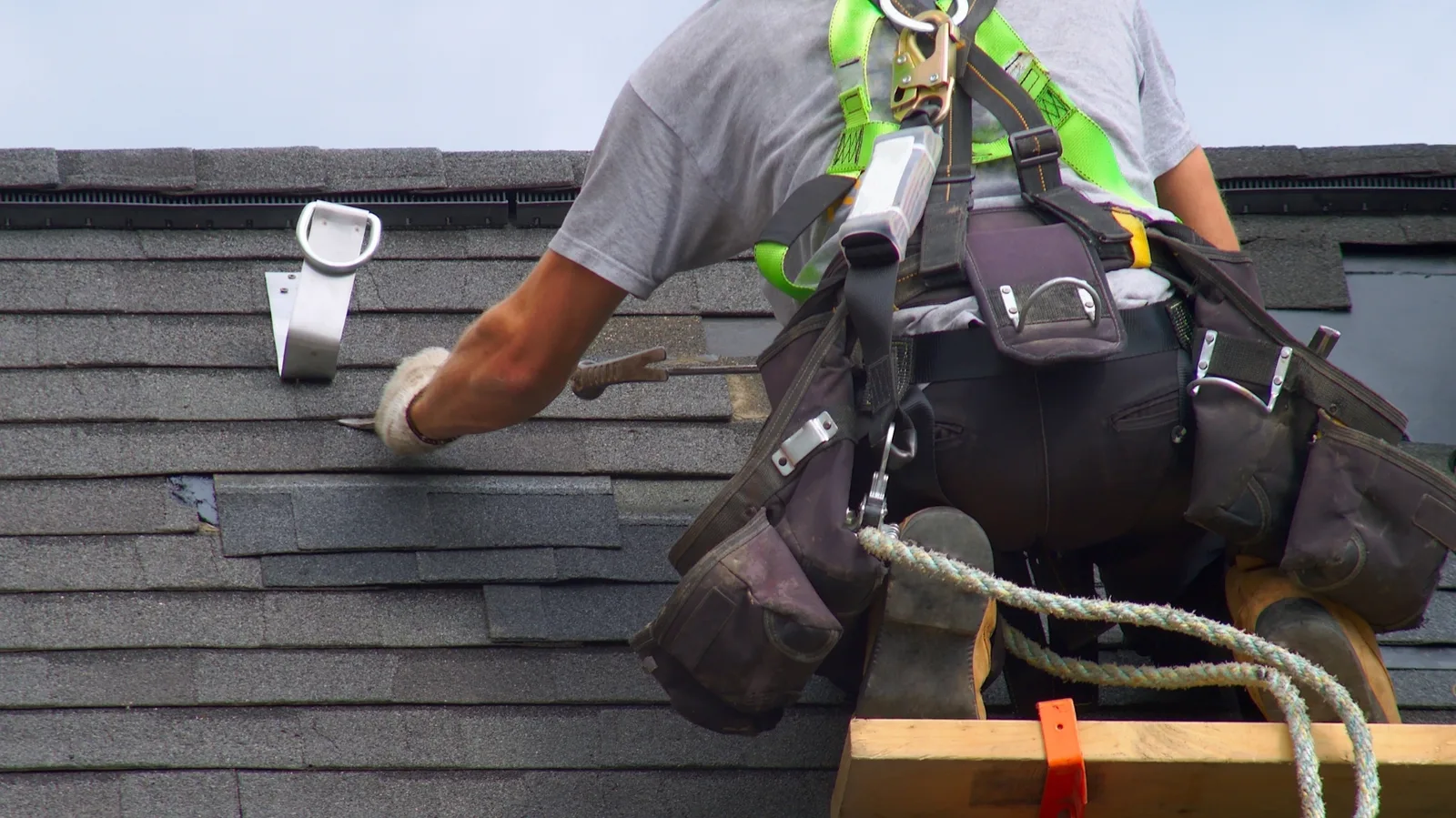
Roof repair in Kiefer, Oklahoma
Get help with a roof leak, damaged shingles or a failed flashing connection in Kiefer. The repair starts with the entry point and the condition of the material around it.
The inspection is free and a roofer walks the roof when conditions allow. You decide what happens next.
Roof leak repair for Kiefer homes
A roof leak in Kiefer shows itself indoors: a brown ring on a bedroom ceiling, a drip beside the bathroom fan, paint bubbling at the top of a wall. The opening that let the water in is somewhere uphill of that stain, and often not directly above it. Rain that gets past a split pipe boot, an open flashing joint or a torn shingle follows the underlayment and the deck downhill, finds a seam or a nail, and only then comes through. That is why the stain is a starting clue and not the repair location.
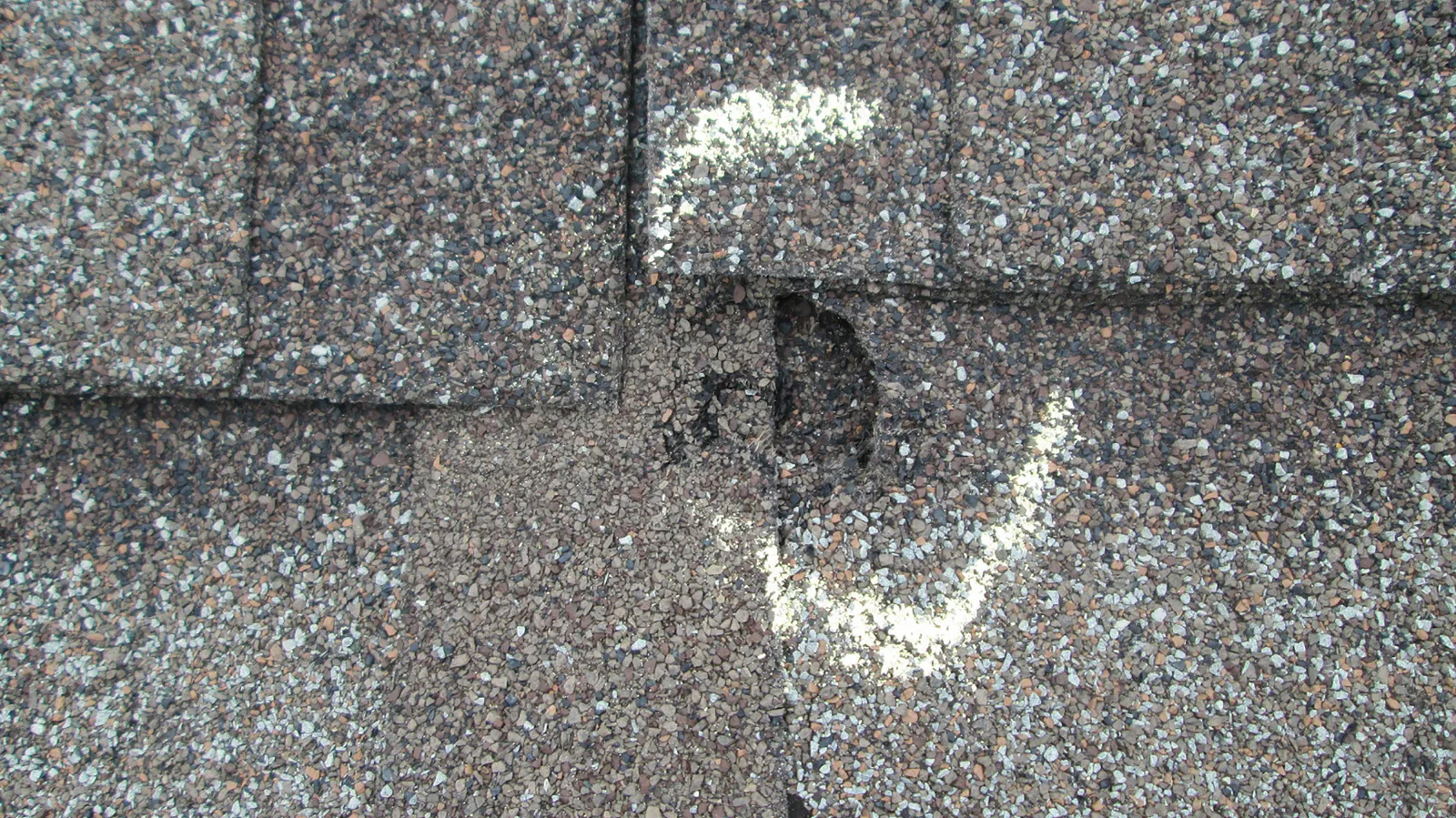
The other thing a stain cannot tell you is how much roof is involved. Wind can lift and crease shingles and break the seal that holds each course to the one below it. Hail bruises the surface and cracks the mat underneath. A roofer has to walk the roof and look at the actual condition, because a weather report or a photo from the yard does not establish what needs to come off. The inspection is free, and it commits you to nothing.
What a Kiefer roof repair involves, part by part
Repairs are named by the part that failed. Each one is a different amount of work because each one sits in the roof differently.
- Lifted, creased or missing shingles
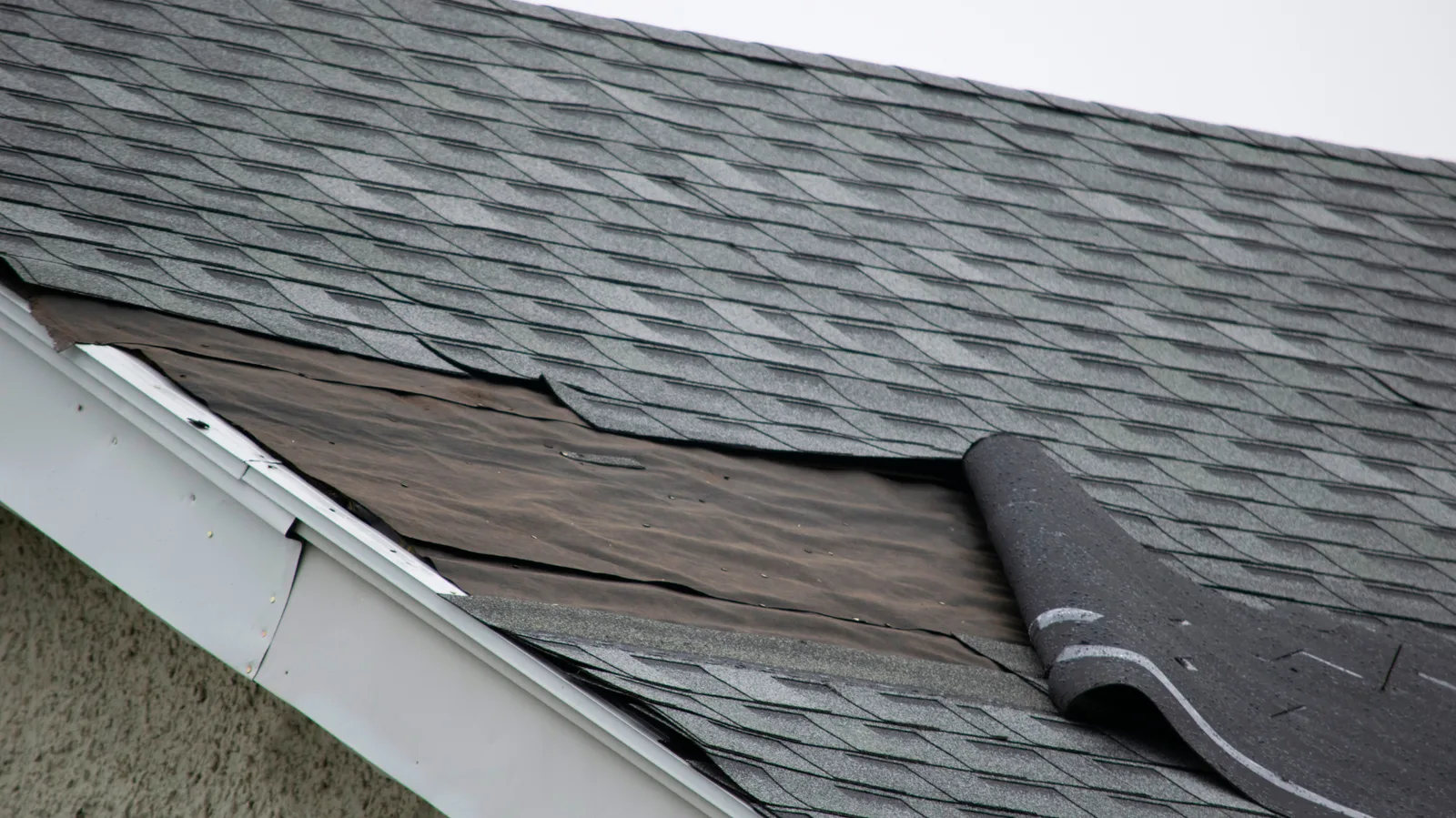
Wind gets under a shingle tab, breaks the adhesive seal and creases the shingle along the nail line. A creased tab does not reseal, so it goes. The repair slips the damaged shingles out, replaces them course by course and reseals the new ones into the neighbors above and below. The shingles around the repair decide how far it reaches: if they crack when lifted, more of them come out.
- Pipe boots and vent caps
The rubber collar around a plumbing vent bakes in the sun and splits long before the shingles are tired, and a split boot sends rain straight down the pipe into the attic. The repair lifts the courses around the pipe, fits a new boot under the uphill shingles and over the downhill ones, and reseals the courses. If one boot has split, the others that went in at the same time have been in the same sun.
- Chimney and wall flashing
Where the roof meets brick or siding, step flashing runs under each shingle course and counter flashing laps down over it from the wall. When the counter flashing pulls out of the mortar joint or the sealant gives up, every rain has a gap to wick into. A real repair resets or replaces the metal and reworks the courses that overlap it. Sealant smeared over the old joint buys a season, not a repair.
- Valleys
A valley carries the runoff from two slopes, so it moves more water than anywhere else on the roof. Shingles that were cut too tight, a rusted valley metal or debris that dams the flow can all let water under the courses on either side. Repairing a valley means opening both slopes far enough to relay the courses over sound valley material, which is why a valley repair reaches further than the leak suggests.
- Ridge caps and edges
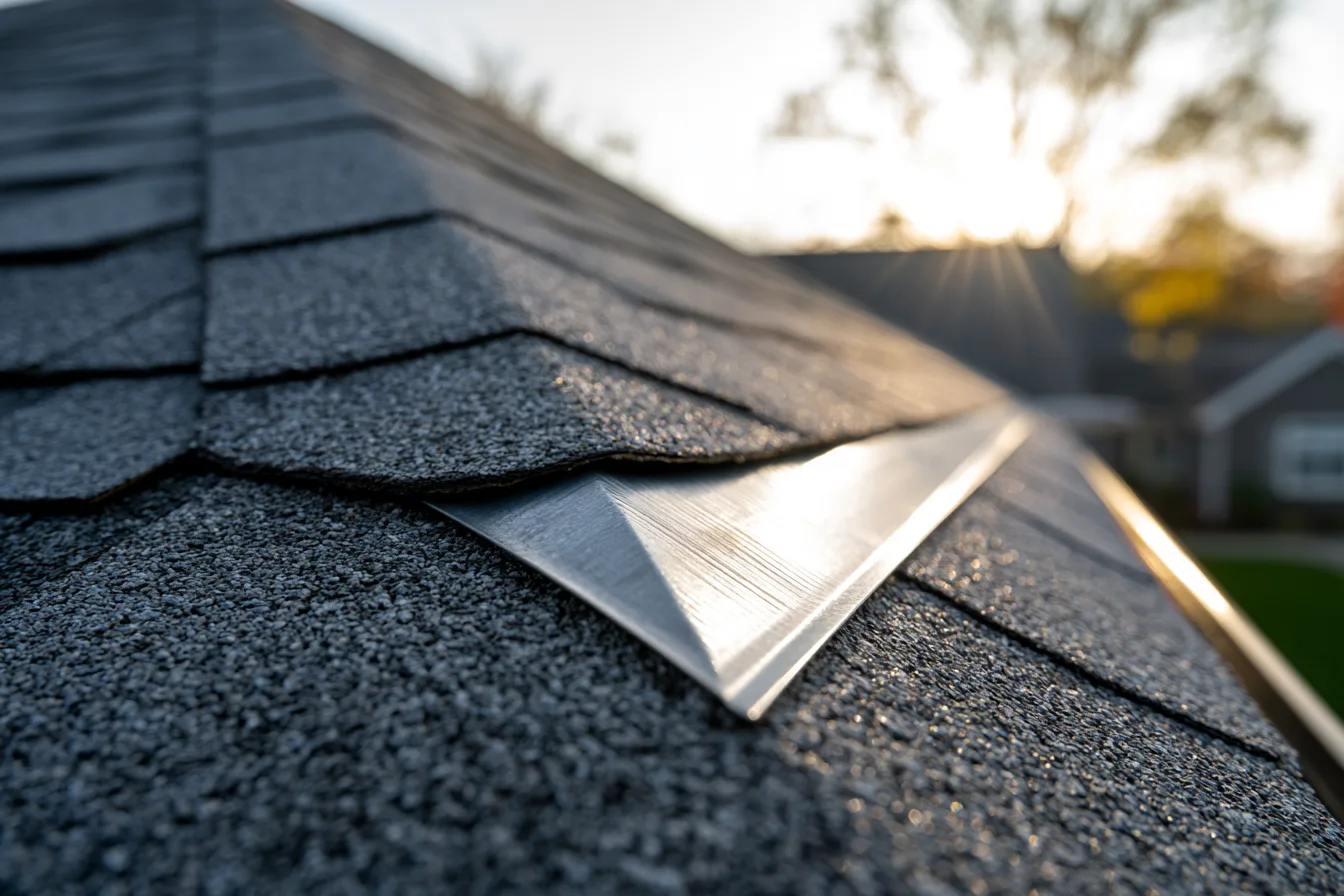
Ridge caps are shingles bent over the peak, and they take the most wind. When one cracks or lifts, wind-driven rain gets in along the very line it was covering. At the eaves and rakes, missing drip edge lets water curl back under the first course and soak the fascia. Both are contained repairs when the surrounding courses are still sound.
- The wood underneath
If water has been getting in for a while, the decking under the leak can be soft or delaminated. New shingles nailed into rotten wood will not hold, so the repair has to cut out the bad sheet and fit new decking before the covering goes back. Nobody can see that from the surface; the scope should say how a soft spot will be measured and priced if one turns up once the roof is open.
What a Kiefer roof repair needs to include
Closing the opening is one part of the job. The new work also has to connect to the roof around it, and that connection is what makes the repair last. Shingles overlap so that water always lands on a surface that sheds it downhill; a repair that leaves a course lapped the wrong way, or a flashing that sits on top of the shingles instead of under them, has built a new leak into the roof.
So the repair includes the courses it has to disturb to get the overlaps right. A boot replacement lifts two or three courses. A wall flashing repair can open a strip along the whole wall. A valley opens both slopes. That is not the roofer growing the job; it is the geometry of a roof that sheds water by overlapping. Whether the shingles around the repair can take that handling is the one condition that changes everything, and it is checked on the roof, not guessed from the ground.
How the repair goes, from the stain to the last shingle
A roof repair in Kiefer runs in a definite order, and each step tells the roofer whether the next one will be bigger or smaller than expected.
- 1
Trace the water to where it actually gets in
The roofer starts uphill of the stain and works back along the path water would take: the nearest pipe, the nearest wall or chimney, the valley above the room, the ridge. Lifted tabs, exposed nail heads, a cracked boot and pulled flashing each leave their own signs. The entry point sets the repair; the stain only sets where to start looking.
- 2
Check the shingles around it
Before anything comes off, the roofer lifts the shingles beside the damage. If they flex and the seal strips are still holding, the repair stays local. If they crack or the granules are gone, the repair widens to the nearest sound course, and if that brittleness runs across the whole slope, a replacement price belongs beside the repair.
- 3
Open the covering
The failed shingles and the courses that overlap the repair are lifted or removed. Nails come out rather than being driven through. Old flashing that is being replaced is pulled, and the underlayment below is checked for tears and staining that show how long water has been getting in.
- 4
Deal with the wood
With the covering open, the decking is finally visible. Solid wood gets new underlayment and the repair moves on. Soft or delaminated decking is cut back to the rafters and replaced, and this is the step that can change the price, because it cannot be seen until now. The scope should already say how that is measured and agreed.
- 5
Rebuild the overlaps
New underlayment, then the new boot, flashing or valley metal, then the shingles relaid from the bottom course up so each one laps over the one below and under the one above. New shingles are sealed to their neighbors so wind cannot get under the fresh edge. Where the repair meets a wall, the counter flashing is reset into the joint.
- 6
Clean up and explain what was found
Old material, nails and offcuts leave the roof and the yard. Then you hear what the roofer found: what was replaced, what was left because it was sound, and whether anything else on the roof is close to needing the same attention. That conversation is where a repair either closes the question or opens the replacement one honestly.
Localized repair or a larger roofing scope?
When the shingles around a boot, a vent cap or a flashing joint still flex and seal, the repair fixes that detail and ties into the roof as it is. This is the shape of a leak repair on a roof that has some life left.
Wind or hail that took out a run of courses, or a valley that has to be opened on both slopes, means a defined section comes off and goes back. The edge of that section is wherever the roofer can tie into shingles that will hold new work.
When the shingles are brittle across the slope, when the repairs are landing closer together each year, or when the deck is soft in more than one place, the money for another repair belongs in a replacement price. We say so, and you compare the two.
What changes the price of a Kiefer roof repair
The price follows how much of the roof has to come apart to fix the failure and put the overlaps back correctly. The same part can be a small job or a large one depending on what is around it. These are the contrasts, not prices; the number belongs to the actual roof.
A new boot fitted under sound shingles, two or three courses lifted and resealed. A short visit.
The same boot on a slope where the surrounding shingles crack when lifted, so the courses around it are replaced as well, or the deck below the pipe is soft and comes out too.
Counter flashing reset into the mortar joint on one side of a chimney, with the step flashing underneath still sound.
Step and counter flashing replaced along a whole wall or all four sides of a chimney, with the courses beside the wall removed and relaid so the new metal sits under them.
A handful of creased tabs replaced and sealed, with matching shingles that tie into the existing courses.
A run of courses across a slope, opened back to the nearest sound shingles, where the color and profile have to be matched or the difference explained before the work.
Debris cleared and a short section of valley courses relaid over sound metal.
Both slopes opened along the full valley, new valley metal and underlayment, courses relaid on each side.
Solid wood under the repair; new underlayment goes straight on.
Soft or delaminated sheets cut back to the rafters and replaced before the covering goes on, measured per sheet and agreed at the price the scope named.
A single story, a walkable pitch, a repair reachable from a ladder set on level ground.
A steep or high roof that needs staging and fall protection to work safely, or a detail hemmed in by a dormer, a chimney and a valley at once.
Repair warranty terms belong to the contractor doing the work. Read them for the repaired area, the work covered and the exclusions, so you know what the paper protects.
Roof repair FAQs
What should I do while the roof is leaking?
Stay clear of wet electrical fixtures and sagging ceilings. Move belongings or catch dripping water only where it is safe. Do not climb onto the roof. For electrical hazards or immediate danger, get qualified electrical or emergency help. Then tell us the room and roughly when it started; tracing the water to the entry point is the roofer’s job, not yours.
Will the repaired area match the rest of the roof?
Function comes first: the new shingles have to be a compatible profile and dimension so the overlaps work. Color is matched as closely as the current product allows, but a weathered roof and a fresh bundle do not look identical up close, and discontinued products sometimes have no exact match. We tell you what difference will remain visible before the work, not after.
Will insurance cover the repair?
Coverage depends on the policy, the cause of the damage and the insurer’s claim findings. A storm date can provide context, but it does not decide coverage. Discuss the roofing scope separately from the insurance settlement.
Can part of the roof be repaired without replacing everything?
Yes, when the affected area can be connected to suitable remaining material. The extent of deterioration and any damage below the covering change that answer. The repair-or-replace guide explains those distinctions.
What affects roof repair cost in Kiefer?
Access, the damaged detail, the amount of material that needs to come off and any deck repairs affect the price. A small visible opening can involve more work if water has reached the supporting layers. The contrasts above show how the same part becomes a smaller or larger job.
Request a free roof inspection in Kiefer
Tell us where you have noticed water or damage and roughly when it began.