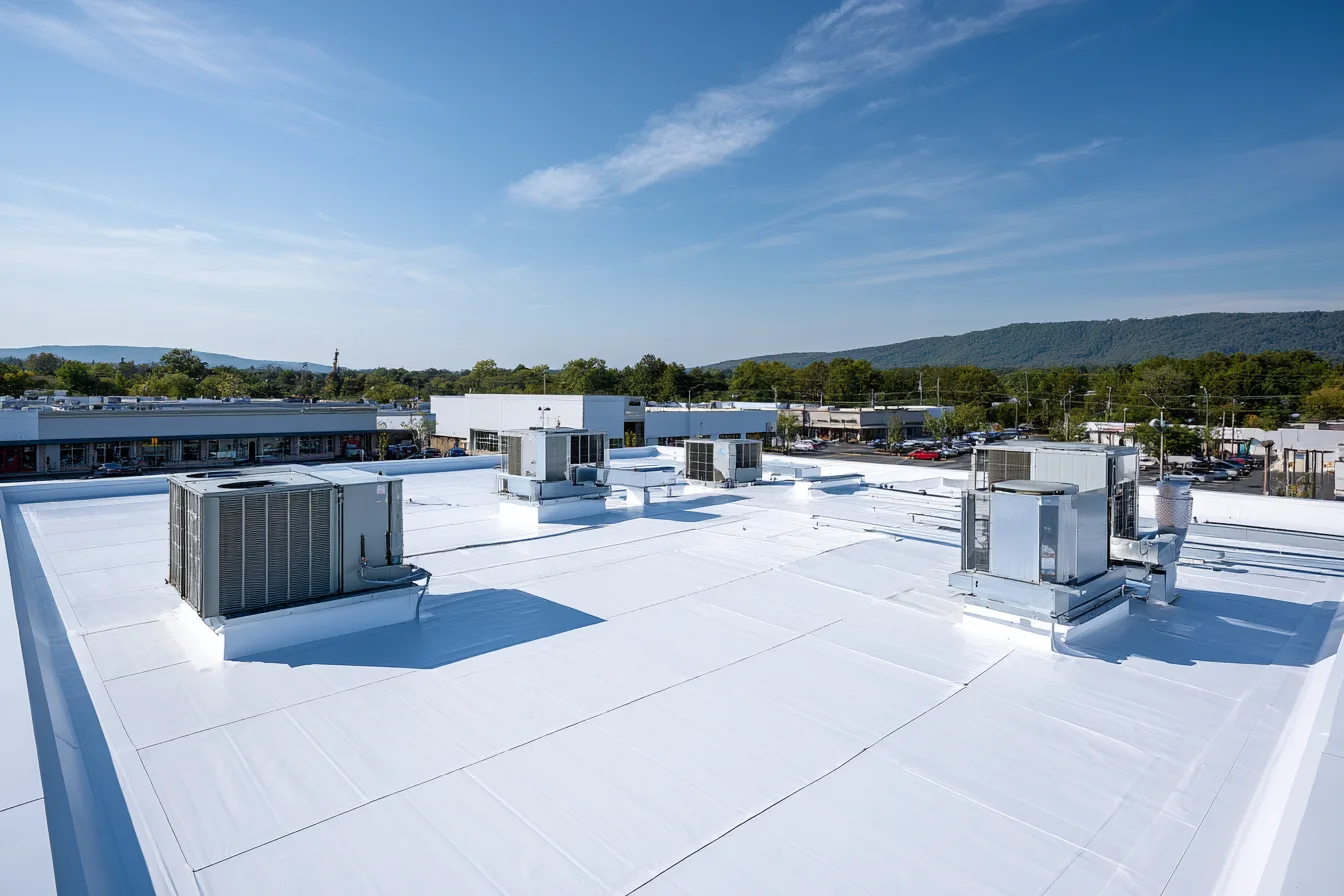
TPO roofing in Kiefer
Plan TPO repair or replacement around the complete roof assembly, from welded seams to the insulation and details beneath them.
The inspection is free and a roofer walks the roof when conditions allow. You decide what happens next.
TPO roof repair and replacement in Kiefer
TPO is a thermoplastic single-ply membrane. Its sheets are joined with heat-welded seams, and the roof it makes depends as much on what is under the sheet and how it is held down as on the sheet itself: the insulation and cover board, the fasteners or adhesive that attach the assembly to the deck, and the flashing at every wall, drain and piece of equipment. The membrane is one part of a system.
For a Kiefer building with an existing TPO roof, the first question is whether the concern is a repairable spot or the sign of a sheet reaching the end of its weldable life. For a new TPO roof, the project is planned from the deck up: what the old assembly is, whether it comes off or gets covered, and how the new one attaches and drains.
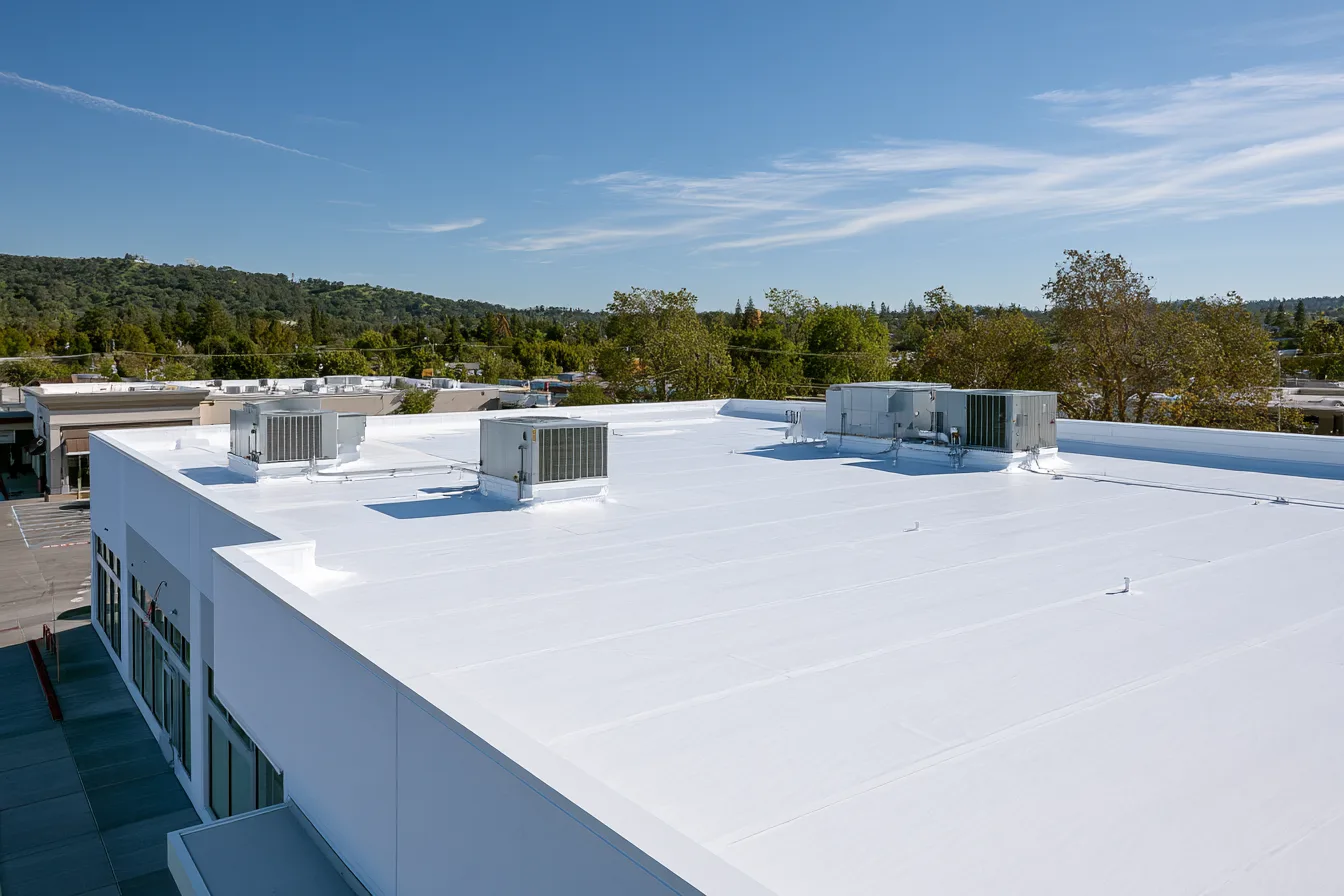
What holds a TPO roof together
Four parts of the assembly, and what the work on each one actually is.
- Welded membrane connections
Field seams are overlapped and fused with a hot-air welder, then probed to confirm the bond. A weld needs clean, dry membrane on both sides and a sheet that has not oxidized past the point where it will fuse. A seam detail is a different thing from a bead of sealant along the lap, and repair materials have to match the existing membrane.
- Attachment to the building
A mechanically attached system fastens the sheet through the insulation to the deck along each seam. An adhered system glues the membrane to the cover board across its whole area. Each holds the roof against wind uplift differently, and the choice follows the deck, the building height and exposure, and the specified system.
- Insulation and cover board
Rigid insulation gives the roof its thermal value and, when tapered, its slope to the drains. A cover board over it gives the membrane a firm, smooth base and protects the insulation from foot traffic and hail. Their condition and attachment matter; a new sheet over wet or crushed insulation is a new sheet over a failing roof.
- Curbs, drains and perimeter details
The membrane has to continue up every curb, into every drain bowl and over every edge, terminated with bars, clamps and preformed corners rather than trimmed off and sealed. These details are their own scope, and they are where a TPO roof either lasts or leaks.
Repairing an existing TPO roof
A contained puncture, a peeled seam or a failed curb flashing is repairable when the membrane around it still welds and the insulation under it is dry. The work cleans the sheet, prepares the surface, welds a compatible TPO patch with the correct overlap and probes the seam. Existing coatings or earlier repairs in another product can stop a weld from bonding, so the roof history matters as much as the hole.
If moisture may have reached the insulation, that area is checked and rebuilt before the surface is closed; the flat roof repair page explains why finding the entry point and defining the wet material belong together. You do not need to identify the system from its color before contacting us. A white roof can be TPO, PVC or a coating over something else, and the repair product has to match what is actually there.
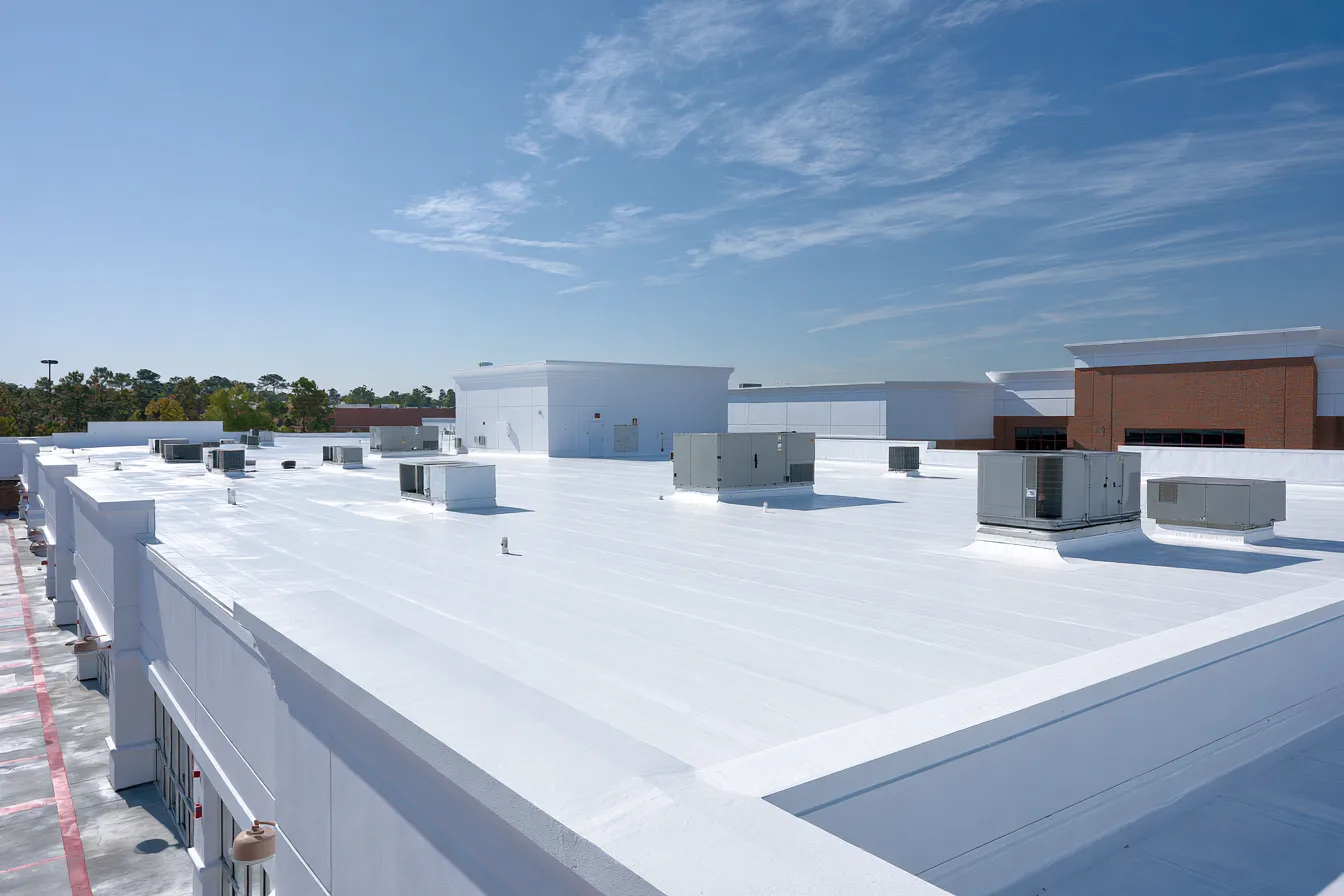
How a TPO roof replacement is planned and built
The order of a new TPO roof, from the existing assembly to the last termination.
- 1
Establish the existing assembly
What the covering is, how many layers are up there, what the insulation and deck are and whether they are wet or damaged. A recover over the old roof needs a dry, sound, well-attached base and a clear reason for keeping it; otherwise the old assembly comes off to the deck.
- 2
Remove or prepare the base
A tear-off strips the old membrane and insulation to the deck, repairs damaged decking and clears the surface for attachment. A recover fixes the existing roof in place and adds a separation or cover board so the new sheet has a smooth base.
- 3
Set the insulation and slope
New rigid insulation goes down in the specified thickness, tapered where the roof needs to drain toward its outlets, then cover board over it. Everything is fastened or adhered to the pattern the system requires for the building’s wind exposure.
- 4
Lay and weld the membrane
Sheets are rolled out, overlapped and welded along each seam. A mechanically attached system fastens through the lap before the next sheet covers it; an adhered system is glued across the field. Seams are probed as they go.
- 5
Flash every interruption
Curbs, pipes, drains, walls and edges are flashed with membrane and preformed accessories, terminated with bars and clamps, and welded into the field sheet. Rooftop units are lifted or worked around as the access plan agreed.
- 6
Finish, drain and record
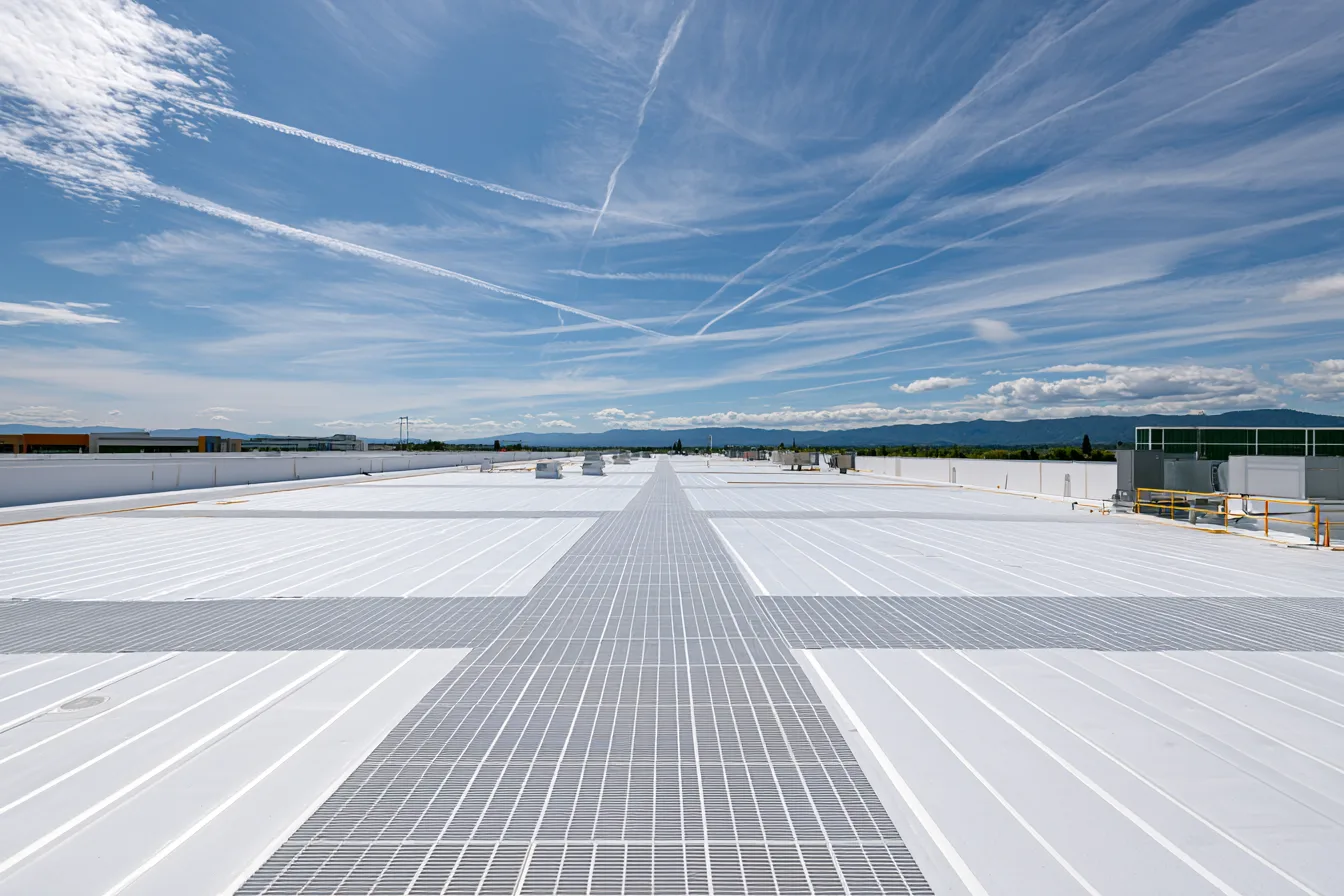
Walkway pads where the units get serviced, drains confirmed running, edge metal fitted. The completed system, its product data and any warranty documents go into the roof file, because manufacturer warranty eligibility is specific to the installed system, not automatic for every TPO roof.
The proposal should connect these choices to your building, not just name a membrane thickness.
TPO roofing FAQs
Is every white commercial roof TPO?
No. Several roof coverings and coatings can be white. Product records and assessment of the actual material help establish what is there; appearance alone does not determine compatible repair products.
Does a thicker TPO sheet solve every roof concern?
No. Membrane selection matters, but so do welds, attachment, insulation, deck condition and drainage. Compare the complete specified assembly rather than treating thickness as a replacement for those details.
Can TPO be installed over an existing roof?
A recover depends on the existing layers, moisture condition, support, attachment and applicable requirements. Unsuitable material needs attention before a new assembly is installed. The repair-or-replace guide explains the retained-layer question.
What warranty terms should I review for a TPO project?
Ask for the actual product and contractor documents, eligibility conditions, exclusions and maintenance responsibilities in the project proposal. Check which party provides each warranty and what the written terms cover.
Discuss TPO roofing for your building
Tell us the building location, what you know about the current roof and the work you are considering. Request a free inspection.