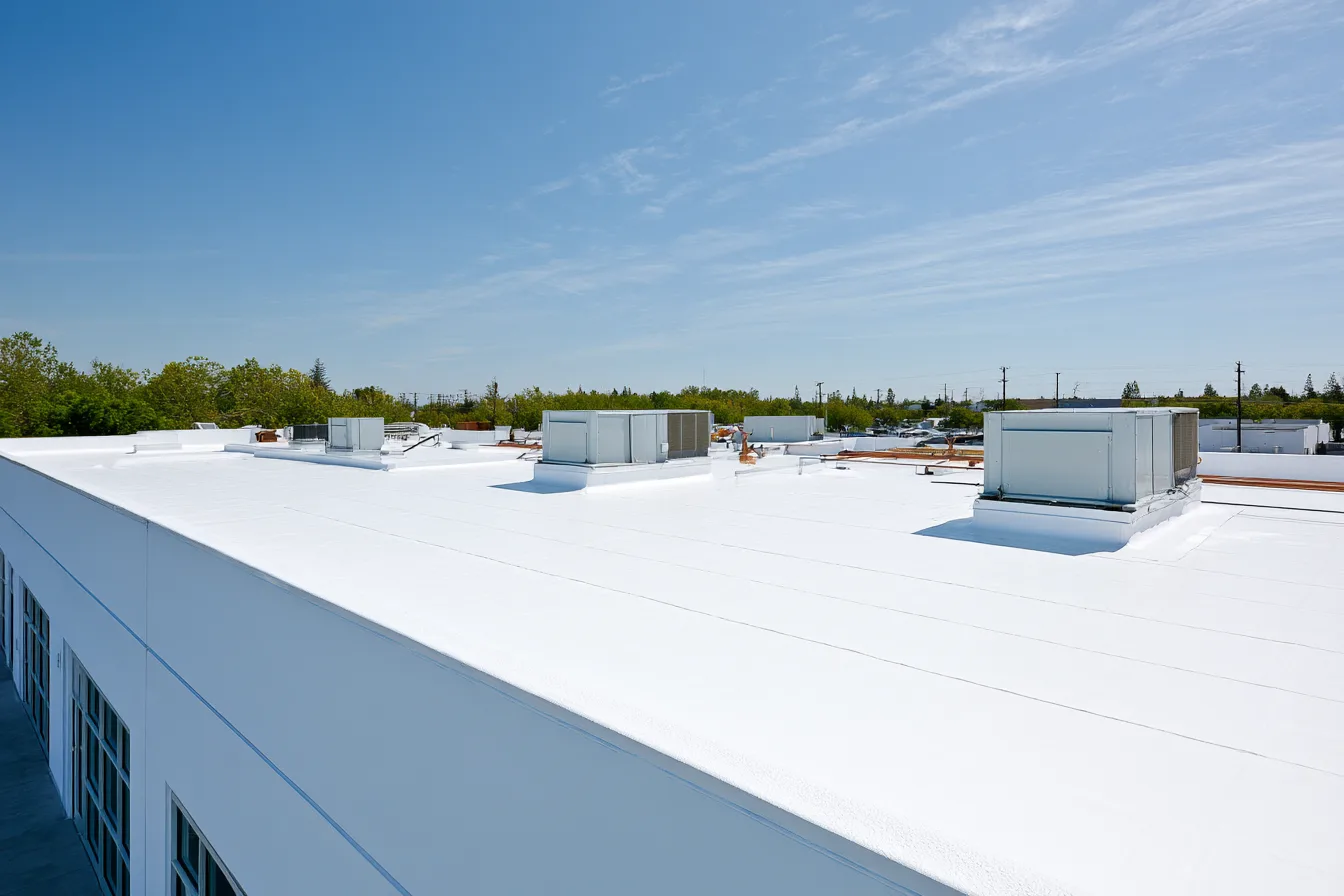
Commercial roof coatings in Kiefer
Consider coating restoration for a roof that is suitable to retain. Moisture, adhesion, preparation and roof details determine whether it fits your Kiefer building.
The inspection is free and a roofer walks the roof when conditions allow. You decide what happens next.
Roof coating restoration for Kiefer buildings
A coating is a fluid-applied layer that cures into a seamless surface over a prepared existing roof. Its value depends entirely on the roof beneath it. The covering has to be compatible with the product, the insulation has to be dry, and the seams, flashings and fasteners have to be repaired with real details before the coating goes over them. A coating does not turn unsound support or trapped moisture into a sound assembly; it seals whatever is there in place.
For a building owner, the useful comparison is the restoration scope against the amount of roof that would otherwise be removed and rebuilt. That starts by establishing what can stay. Then the preparation, the detail repairs and the coating system are priced together as one project, because the preparation can be the bigger part of the work.
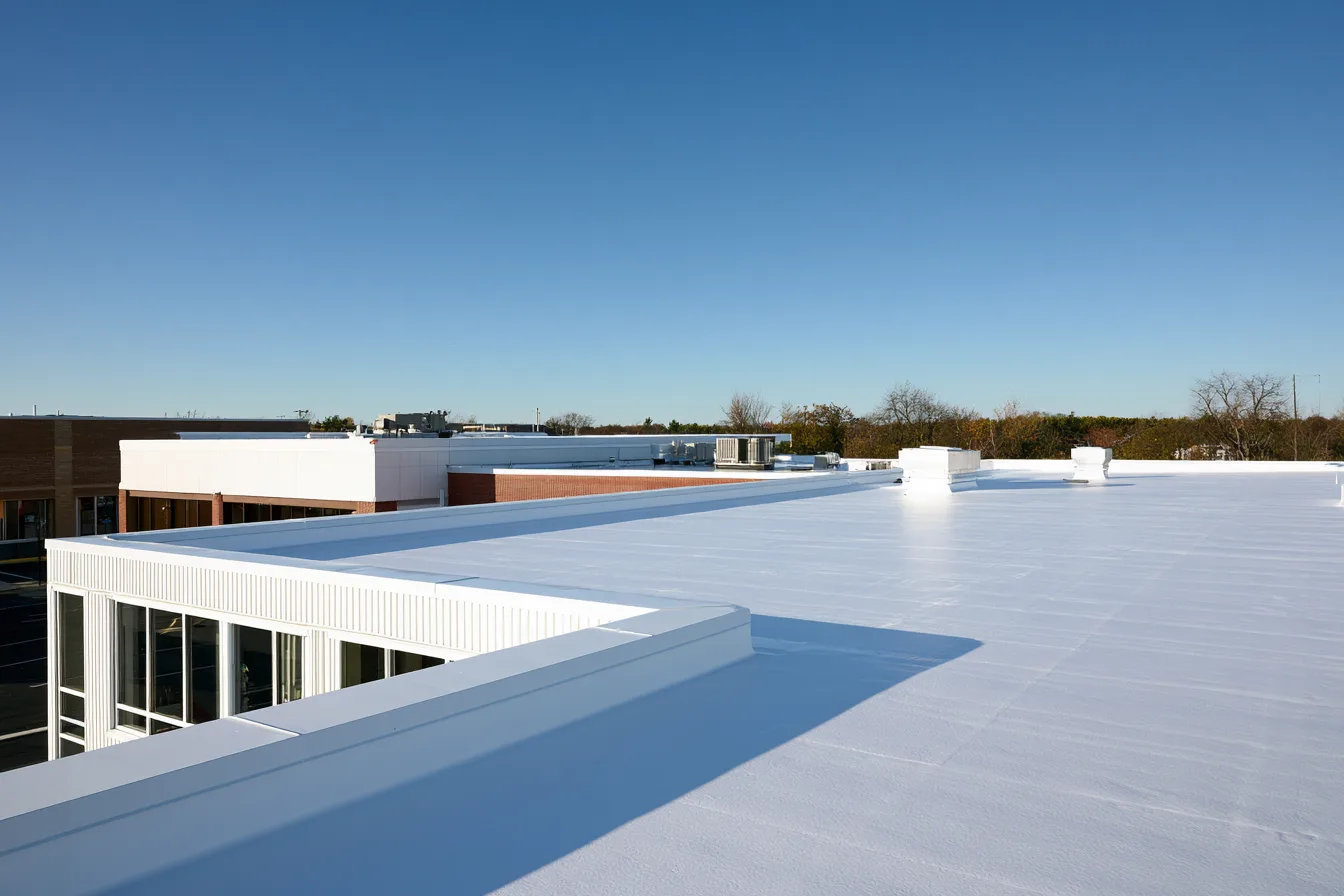
What makes a roof suitable for coating
Four conditions, checked before anyone proposes a product.
- Moisture and the retained layers
The insulation is checked for moisture by probe or core cut. Wet areas come out and are rebuilt before the coating, because a coating over wet insulation seals the water in under a fresh surface and the deck below keeps rotting.
- A compatible, sound surface
Existing membrane, metal, older coatings, oil and chalking all affect whether the new product will bond. The system needs a substrate it can adhere to after cleaning and priming, and an adhesion test on the actual roof is how that is confirmed rather than assumed.
- Connections ready for restoration
Open seams, split curb flashings, backed-out fasteners on a metal roof and cracked pipe boots each get their own repair detail with reinforcing fabric or a compatible patch. A field coating is not a substitute for repairing an open or moving connection.
- A working drainage path
Outlets and roof shape still govern where the water goes. Some products tolerate standing water; none of them clear a blocked drain or lift a low spot. Ponding areas are corrected or the product’s standing-water provisions are checked before the roof is coated.
The work before the coating goes down
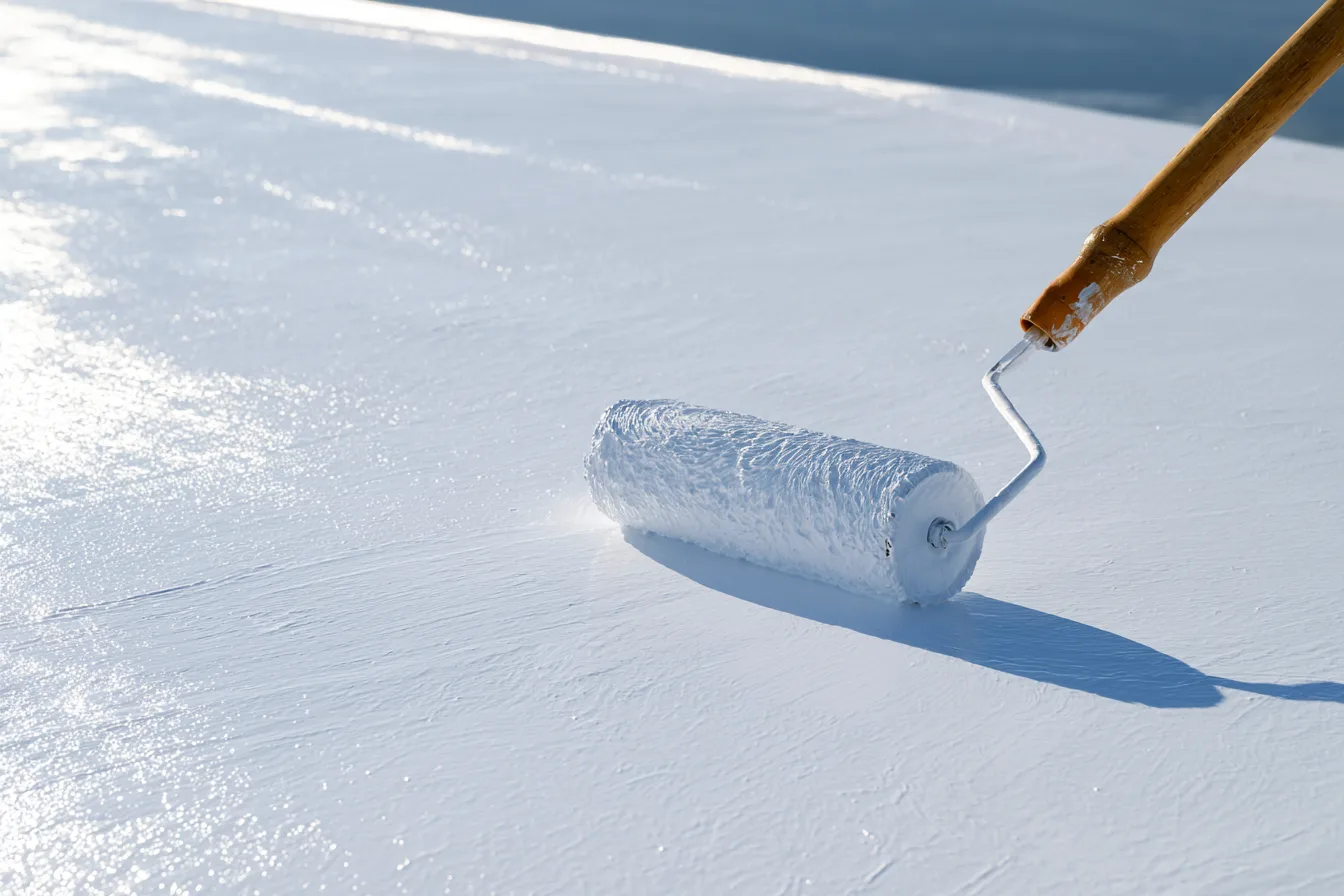
A coating job is mostly preparation. This is the order it runs in.
- 1
Address the existing defects
Wet insulation cut out and replaced, split seams and flashings repaired, loose fasteners reset or replaced, rust on a metal roof treated. The retained roof has to be a sound basis before anything goes over it.
- 2
Clean, dry and test the surface
Pressure washing and any cleaner the product calls for, then time to dry completely. An adhesion test patch on the actual roof confirms the product will bond to this surface; primer is applied where the system requires it.
- 3
Complete the detail work
Seams, curbs, drains, pipes and edges get reinforcing fabric embedded in base coat or a compatible flashing-grade product. These transitions move and hold water, and they get more material than the open field.
- 4
Apply the specified system
Base and top coats rolled or sprayed to the product’s coverage rate and thickness, in the weather window the product allows, with curing time between coats. Coverage, temperature and humidity requirements are what set the schedule, and they also govern the manufacturer’s terms.
Compare restoration with roof replacement
Restoration keeps most of a suitable existing roof in place; replacement removes and rebuilds the assembly. That difference shows up in debris, access, labor and material handling, and it is why restoration is worth pricing on a roof that qualifies. It does not produce a reliable savings percentage, because on a roof with wet insulation or failed details the preparation can be a large share of the coating scope.
Compare proposals by what is being retained, which defects are being corrected, the product system and the detail work included. When the existing assembly does not qualify, when the insulation is wet across large areas, the membrane will not take adhesion or the deck has moved, TPO roof replacement or another new system is the honest scope, and a coating would only have deferred it at a cost.
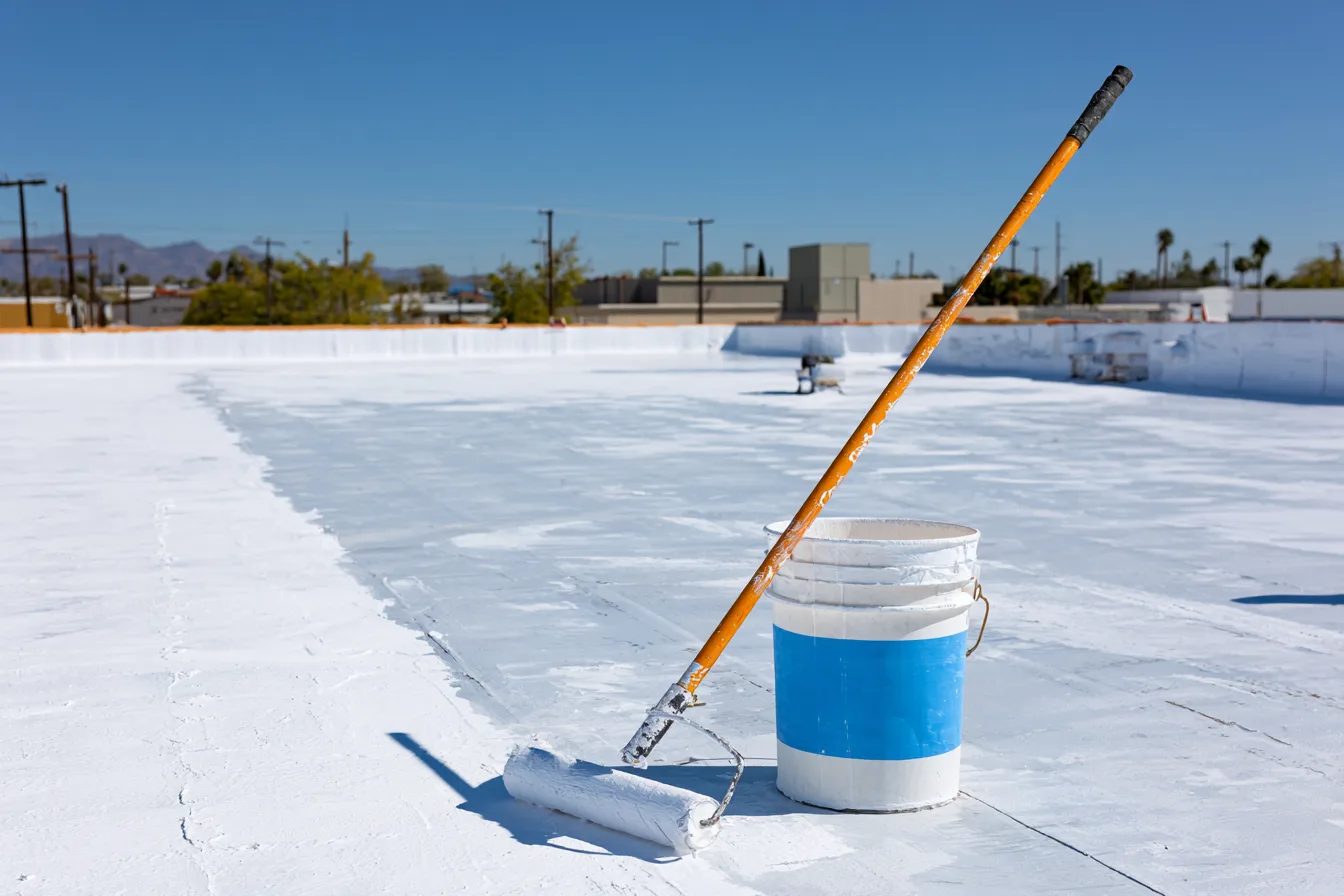
Roof coating FAQs
Can a coating fix an actively leaking roof?
The entry point and any affected material need assessment and appropriate repairs. Coating may be part of a restoration system on a suitable roof, but it should not conceal unresolved damage. Start with flat roof repair if a leak is the immediate concern.
Can a metal roof be coated?
Some coating systems are intended for suitable metal substrates. Corrosion, seams, fasteners, prior finishes and adhesion need review first. Compatibility and preparation matter more than a general yes for every metal roof.
Does silicone make drainage problems irrelevant?
No. Product-specific resistance to standing water does not correct blocked drainage, unsuitable roof shape or structural concerns. The water path and the actual system requirements still need attention.
How long will a roof coating last?
The product, application, underlying roof condition, exposure and maintenance affect service life. Any offered warranty comes with specific terms. Ask for the actual system and documents rather than relying on a generic lifespan.
Evaluate coating options for your roof
Share the building location, current roof information if you have it and the concern you want to address. Start with a free inspection.