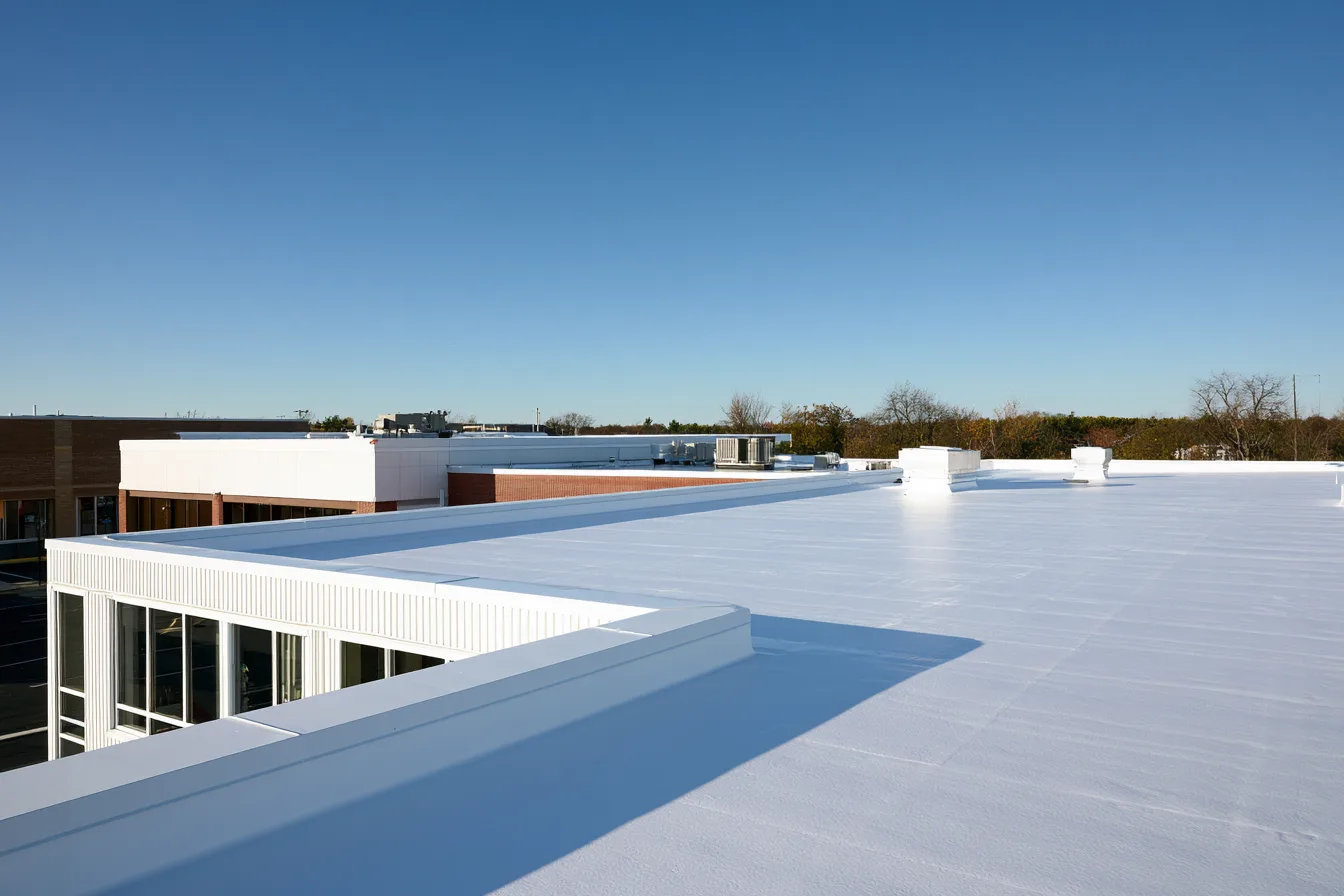
Flat roof repair in Kiefer
Get help with a low-slope roof leak in Kiefer. Define the damaged connection, the condition beneath it and the repair that fits your building.
The inspection is free and a roofer walks the roof when conditions allow. You decide what happens next.
Low-slope roof leak repair in Kiefer
A low-slope leak starts at a membrane seam, a puncture, a curb, a drain or the roof edge, and it shows up somewhere else. Water that gets past the surface runs along the top of the insulation or the deck and drops at a fastener or a joint some distance away, over a tenant space or stored stock. The indoor location is useful information; it is not the entry point.
The repair needs a sound base as well as a closed opening. That means identifying the existing roof system, examining the connections uphill of the drip and finding out whether water has been sitting in the insulation or reaching the deck. How far the wet material runs decides whether the work stays localized, and it is the one thing the surface cannot show.
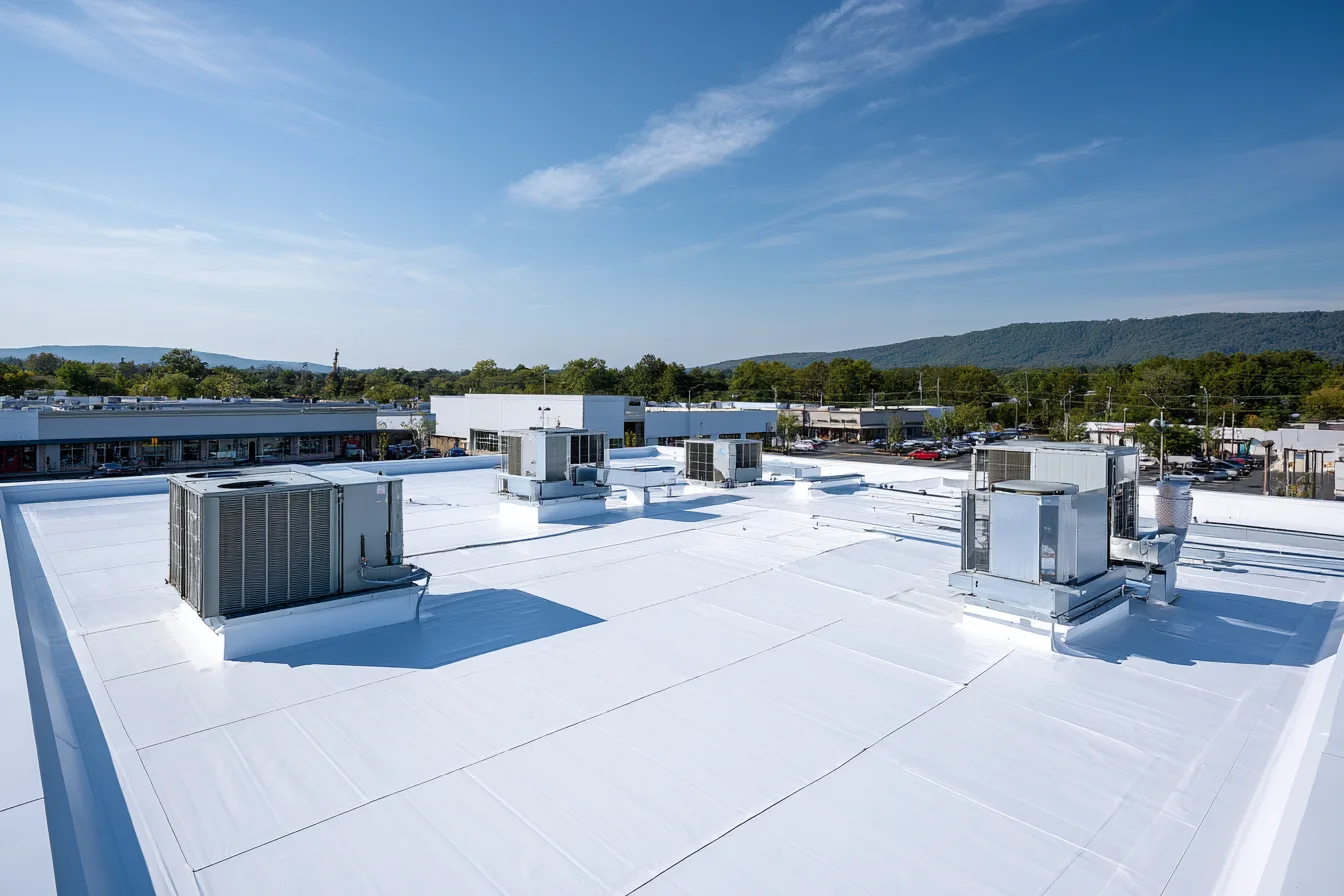
Seams, curbs and drainage create different repairs
Each entry point sits in the roof differently, so each one is a different repair.
- An open membrane seam
A seam that has peeled or was never fully welded lets water straight onto the insulation. The repair cleans and prepares the membrane on both sides and makes a compatible connection: a heat weld on a thermoplastic sheet, an adhesive patch on a rubber one, a torch or cold-applied patch on modified bitumen. The same patch product does not fit every roof chemistry, and the membrane around the seam has to be sound enough to bond to.
- An equipment curb or pipe
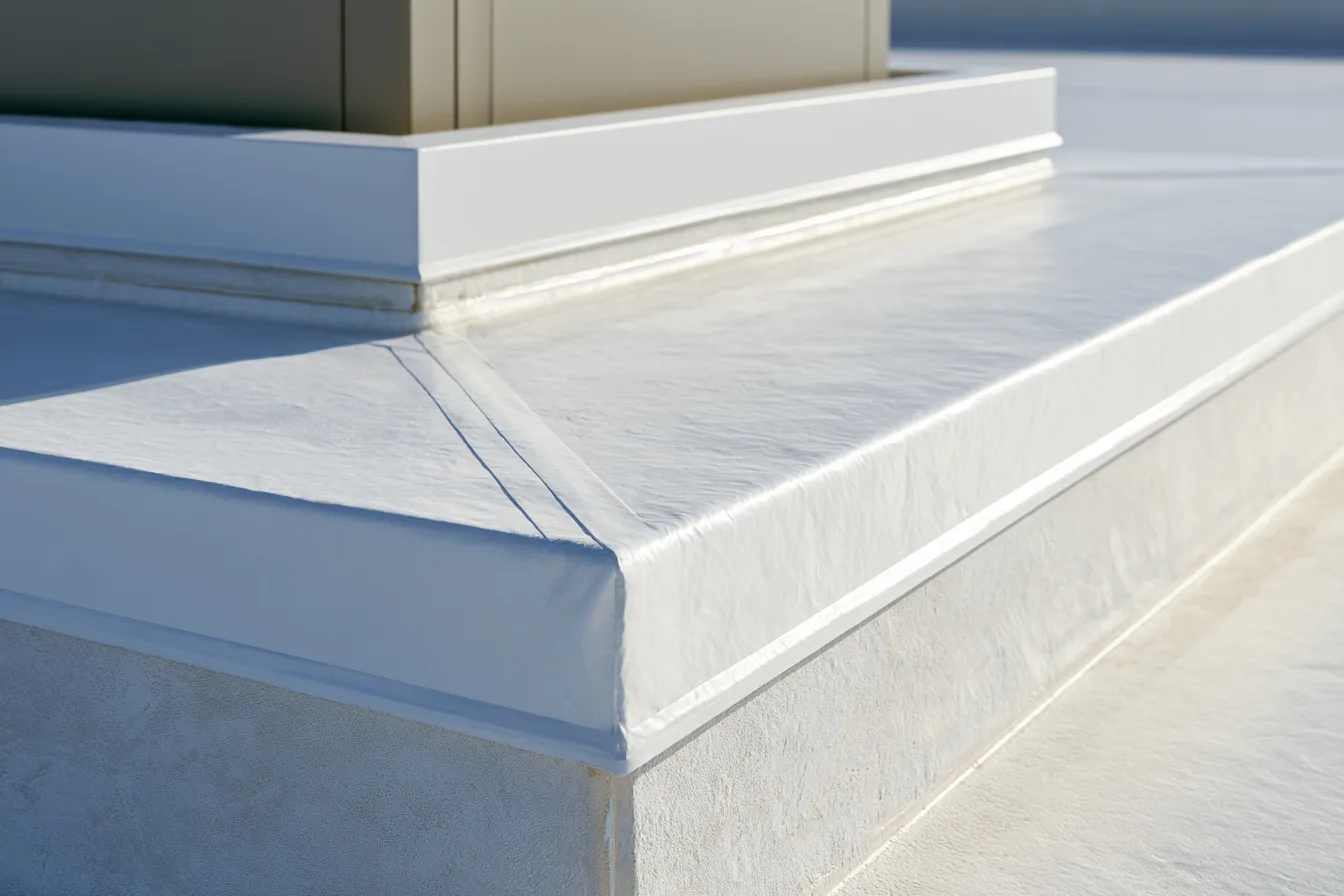
The membrane turns up the curb and terminates under a cap or a clamp. Movement from the unit, a failed termination bar or a flashing that has pulled away lets water in even when the field is fine. The repair reflashes the curb with new membrane and a proper termination, and the unit sometimes has to be lifted or disconnected to do it.
- A roof edge or parapet
Perimeter securement, wall flashing and coping work together, and wind works on all three. When coping lifts or a wall flashing splits at the corner, water gets behind the parapet and into the wall as well as the roof. The repair reaches further than the visible surface because the edge has to be resecured, not just resealed.
- A drainage concern
Debris in a strainer, a drain that sits above the low point or a settled deck leaves water on the roof, and standing water finds the smallest opening. The repair examines the water path and the assembly under the pond. A patch or a coating does not reshape the roof or clear a blocked outlet.
How a Kiefer flat roof leak repair goes
A membrane repair runs in an order, and the middle of that order is where the size of the job gets decided.
- 1
Trace the water uphill
From the drip inside, the roofer works back across the roof to the nearest seam, curb, drain and edge, looking for open laps, splits, punctures, lifted terminations and ponding. On a flat roof that can be a long way from the stain, so the whole area uphill of it gets walked.
- 2
Identify the system and the history
What the membrane is, what is under it and what has been patched before. A repair material has to match the roof chemistry, and an earlier patch that failed tells the roofer something about why.
- 3
Check the insulation
A probe or a small core cut at the leak shows whether the insulation is wet and how far the wet runs. This is the step that turns a surface patch into a rebuild, and it is why the scope should say how wet material is measured and priced before the roof is opened.
- 4
Remove what is wet, rebuild the assembly
Wet insulation and cover board inside the repair area come out to the deck and go back new, attached to match the surrounding roof. Dry assembly stays. The patch is only as good as what it sits on.
- 5
Close the surface with a compatible detail
Membrane cleaned and primed where the product needs it, a patch welded or bonded with the correct overlap, curb and edge terminations rebuilt with new flashing and a proper bar or clamp. Then the seam is probed to check the bond.
- 6
Restore the drainage and record the repair
Strainers cleared, outlets confirmed running, any correction to the water path made. The repair is added to the roof file with its date and location, so the next roofer starts from knowledge.
Wet insulation changes a surface repair
A dry-looking surface does not establish that the layers beneath it are dry. Where the drip inside, a soft spot underfoot or a blister in the membrane suggests trapped moisture, the insulation gets checked before the surface is closed, because sealing the opening above wet material does not make that material sound. It makes it permanent.
The practical question is where dry material begins. Cutting out the wet insulation within the repair area and rebuilding the assembly there is a different job from spreading a surface product over the symptom, and the scope should say which one is being proposed and how the wet area is measured.
When the wet runs across a large part of the roof, the honest comparison is between the localized repair and a larger scope. That might be coating restoration once the wet material is out, or a membrane replacement from the deck up. A repair that keeps chasing water across a wet roof can cost more over a couple of seasons than the decision it is avoiding.
Keep roof work coordinated with the building
Roof access, equipment clearances, delivery areas and the space under the leak all shape how the repair is scheduled. Some concerns can be examined entirely from the roof; a core cut or a look at a wet ceiling can mean a short visit inside. Tell us about tenant activity, restricted areas and anything below the leak that cannot get wet when you arrange the free inspection, and the sequence gets planned around it.
For a known membrane, the TPO roofing page explains welded connections and what a replacement involves. If restoration is on the table, read what makes a roof suitable for coating before treating it as the automatic next step; the preparation is most of that job.
Flat roof repair FAQs
Does standing water always mean the entire roof needs replacement?
No. The cause, extent, duration and roof system matter. A blocked strainer is cleared; a low spot may be corrected with tapered insulation or a new outlet. Drainage is examined alongside the condition of the assembly under the pond.
Why does the roof leak only with certain rains?
Wind direction, rainfall intensity, water accumulation and different entry paths can change when a leak appears. A wind-driven rain reaches a lifted edge or parapet flashing that a calm rain never touches. Describe the pattern you have noticed, and let the roof assessment establish which detail is involved.
What if I do not know the membrane type?
You can still request help. Share any existing roof records and describe the concern. The commercial roofing overview explains why identifying the system and prior work matters before selecting repair materials.
Can the business remain open during a repair?
That depends on access, the work area, interior investigation and the operation below it. Discuss entrances, occupants and sensitive activities before setting the work sequence rather than assuming every repair has the same effect.
Request help with your Kiefer flat roof
Describe the leak or visible concern, the building location and any access needs. Start with a free roof inspection.